For most of 2022 through 2024, the conversation with new wholesale clients was about managing freight cost as a meaningful chunk of landed price - air freight surcharges, Red Sea rerouting premiums, container shortages pushing ocean rates to levels that made small orders genuinely uneconomical. We spent a lot of time helping clients consolidate orders just to make the freight math work.
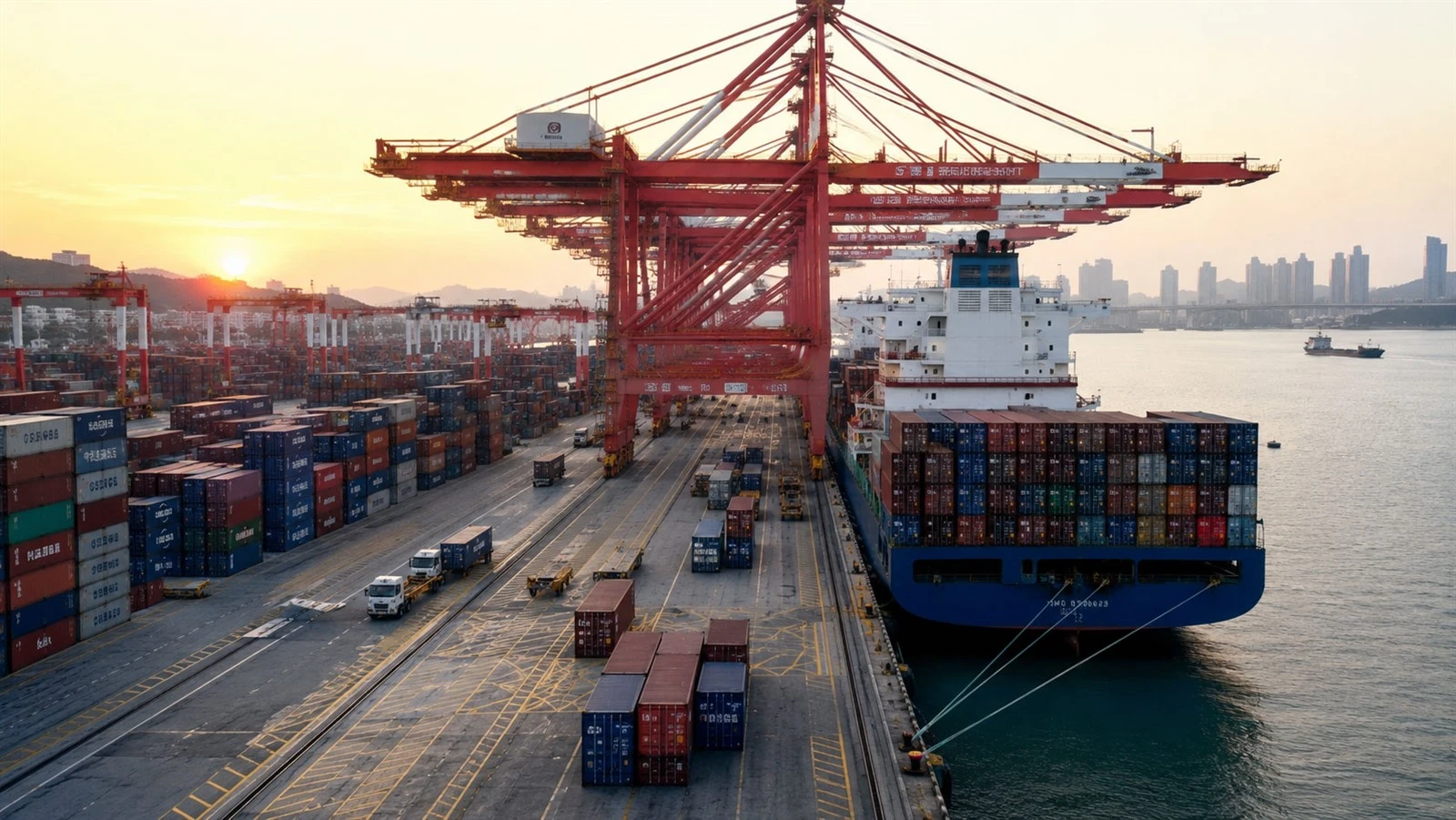
That conversation has flipped. The relative normalization of maritime routes - including the return of vessels to the Suez Canal - has freed up roughly 3% of global effective capacity, adding downward pressure on already-soft rates in 2026. Freight rates from Asia to Europe are running $1,300–$1,500 per container as of early March 2026 - well below the elevated rates of the past few years, driven by a surplus of vessel capacity over demand.
For a wholesale buyer placing bulk iPhone screen orders, this isn't just a footnote in a logistics report. It changes the calculation for how much inventory makes sense to hold, how often you should be ordering, and whether strategies that didn't make sense 18 months ago - like building a larger buffer stock on your core models - are worth revisiting now.
This article walks through what's actually changed in shipping costs and conditions for iPhone parts imports in 2026, what it means for your ordering strategy specifically, and where the freight landscape is likely heading over the next several years.
Part 1: What Actually Changed in Shipping Costs Through 2025–2026?
To understand why this matters for your ordering decisions, it helps to understand what drove rates up in the first place - and why those pressures have eased.
The Capacity Surplus Is Real and Structural
A large volume of newly delivered vessels continues to increase global shipping capacity, with the pace of fleet growth outpacing the rate at which cargo is being shipped. This isn't a temporary blip - it's the result of ordering decisions made by shipping lines years ago, during the pandemic-era capacity crunch, that are now arriving as new vessels enter service faster than global trade volume is growing.
During 2024 and 2025, shippers worried about service disruptions and tariffs, prompting just-in-case inventory strategies and erratic ordering. Once tariff anxieties eased in late 2025, orders returned to a more conventional pattern that now closely tracks inventory levels - reflecting a leaner, just-in-time approach.
The combination - more ships, more cautious importers - has produced sustained downward pressure on rates that's now been in place long enough to plan around, rather than something to wait out.
Geopolitical Risk Premiums Have Largely Unwound
During the Red Sea attacks of 2023–2024, vessels rerouting via the Cape of Good Hope added 10–14 days and $1,000–$2,000 per FEU in extra costs, with War Risk Surcharges representing an additional $500 to $1,500 per container during periods of tension. As maritime routes have partially normalized through early 2026, those surcharges have largely disappeared from quotes on Asia-Europe and Asia-US lanes.
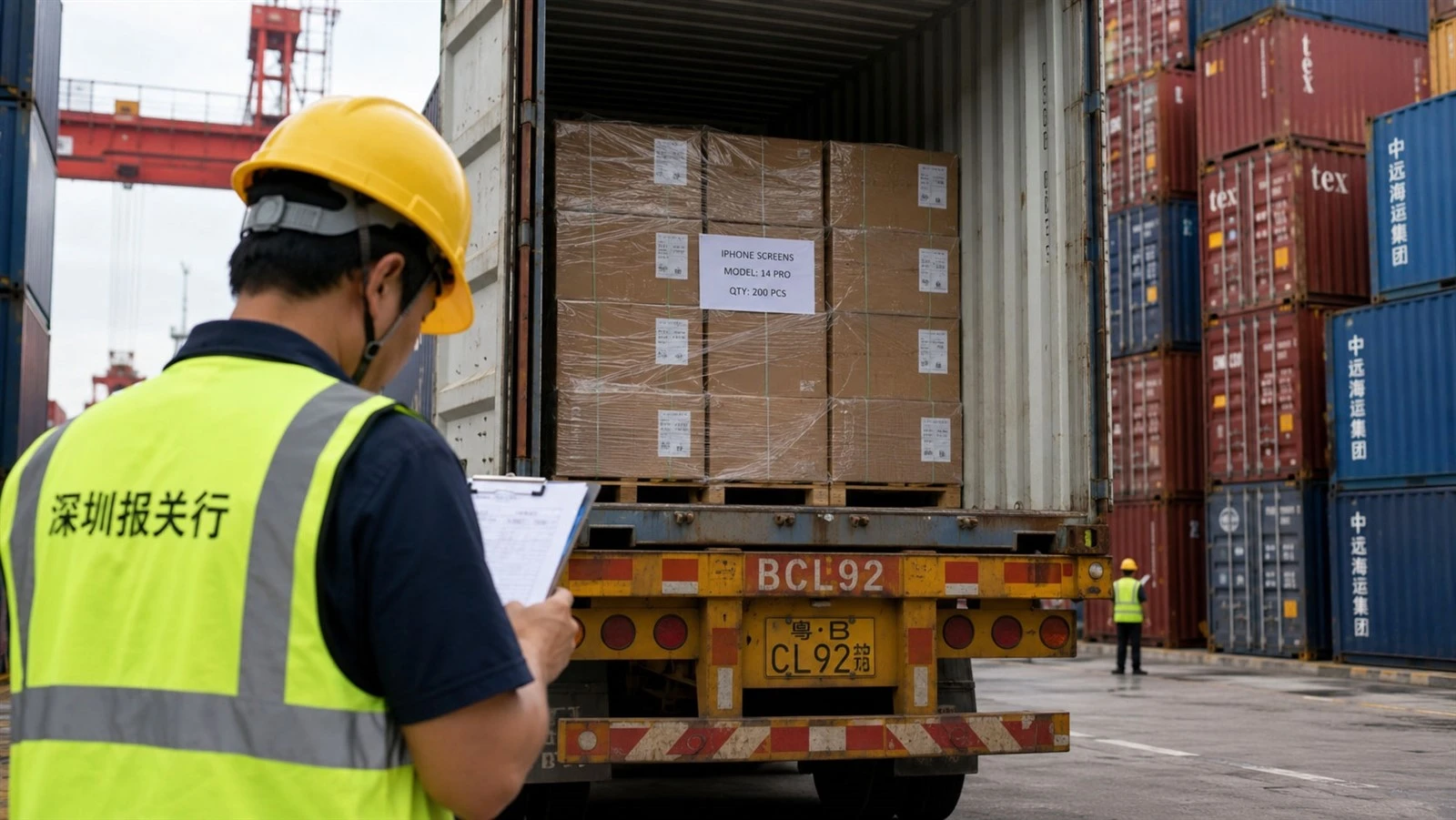
For iPhone screen shipments - which, at wholesale volumes, are typically sub-100kg shipments moving via express courier or consolidated air freight rather than full containers - the direct container rate isn't the number that affects you most. But the broader rate environment affects air freight and consolidated cargo pricing too, because air cargo capacity decisions and pricing are influenced by the same supply-demand dynamics across modes.
US Import Volumes Are Down, Which Changes the Calculus for US-Bound Orders
US containerized imports are expected to be lower in 2026 than in prior years, with notable year-over-year declines in early months. Air cargo volumes have also shown signs of pullback, with year-over-year declines reported through much of 2025.
For US-based wholesale buyers, this has a counterintuitive but real benefit: with overall import volumes down, the express courier and air freight capacity serving routes from Shenzhen to major US hubs is less constrained, supporting more competitive pricing and more reliable transit times than during the high-volume, high-congestion periods of recent years.
Part 2: What This Means for Your Order Frequency and Size?
Here's where the freight environment translates into an actual decision for your business: the cost penalty for ordering in smaller, more frequent shipments has decreased - but the case for larger consolidated orders has gotten stronger too, for a different reason.
Let me walk through both sides of this.
The Case for More Frequent, Smaller Orders
With express courier rates more stable and consolidated air freight pricing favorable, the per-unit freight cost penalty for ordering 30–50 units versus 200 units has narrowed. Average delivery time from Shenzhen via DHL Express runs 3.9–4.7 days to most major markets. For distributors and repair shops with tighter cash flow, this means you can maintain leaner inventory - ordering more frequently in smaller batches - without the freight cost penalty that made this approach expensive in 2023–2024.
This matters particularly for buyers carrying a wide model range (iPhone 11 through 16, multiple grades). Rather than committing significant capital to deep stock across 15+ SKUs, a leaner ordering cadence - say, every 2–3 weeks instead of monthly - lets you respond to actual demand patterns without the freight economics punishing you for it.
The Case for Larger Consolidated Orders
At the same time, the most prudent approach for 2026 is to front-load high-turnover, high-margin products, in coordination with cash-flow analysis. Why does this make sense when rates are favorable, rather than when they're rising?
Because favorable rates plus volume pricing tiers compound. When freight cost per unit is already low, the marginal cost of moving from a 100-unit order to a 300-unit order is smaller than it would be in a high-freight-cost environment - which means the volume pricing discount you unlock at higher MOQ tiers represents a larger net savings after freight, not a smaller one.
Worked example - iPhone 14 Soft OLED, UK-bound order:
| Order size | Unit price (factory) | Freight per unit (2026 rates) | Landed cost per unit |
|---|---|---|---|
| 30 units | $38.00 | $3.20 | $41.20 |
| 100 units | $34.00 | $1.80 | $35.80 |
| 300 units | $30.50 | $1.10 | $31.60 |
The freight-per-unit gap between a 30-unit order and a 300-unit order is about $2.10 in the current rate environment - narrower than it would have been in 2023, when air freight surcharges could push that gap to $4–6 per unit. But the factory pricing gap between those tiers ($7.50/unit) remains the larger driver of total savings. In a low-freight environment, that pricing gap becomes the dominant factor in the total landed cost difference - which strengthens the case for buyers who can commit to higher volume tiers to do so now, while freight isn't working against that decision.
Part 3: The Buffer Stock Question - Does 2026 Change How Much Safety Stock You Need?
Leaner warehouses tied to just-in-time practices reduce inventory costs but are less able to handle demand spikes and require more dependable transportation. The trucking sector is poorly positioned to adjust to any demand increase after one of its longest and softest downturns in years.
This is a nuance worth sitting with. The broader logistics environment in 2026 rewards lean inventory - lower carrying costs, faster cash cycles, less capital tied up in stock sitting on shelves. But it does so in an environment where the capacity to absorb sudden demand spikes has also softened, because carriers and warehouses have scaled down in response to lower volumes.
For iPhone screen wholesale buyers, the practical translation: the cost of holding buffer stock has decreased (cheaper freight makes replenishment faster and less painful), but the cost of running out of stock during a demand spike hasn't decreased - and may have increased slightly, given softer transport capacity that's less able to flex.
This argues for a specific strategy: maintain lean stock on your secondary and tertiary models (where demand is predictable and replenishment is fast and cheap), but maintain meaningful buffer stock on your top 3–5 highest-velocity models - currently iPhone 13, iPhone 14, and iPhone 14 Pro for most of our clients - where a stock-out during a demand spike (a new iPhone launch driving trade-in volume, a regional event increasing screen damage rates, a seasonal pattern like back-to-school) costs you the most in lost sales and customer relationships if replenishment is delayed.
Part 4: Shipping Method Selection in the 2026 Rate Environment
The relative economics between express courier, consolidated air freight, and sea freight have shifted with the broader rate environment. Here's how we're advising clients to think about method selection right now.
Express Courier (DHL / FedEx / UPS) - Still the Default for Most Wholesale Orders
For orders under roughly 50kg - which covers the large majority of iPhone screen wholesale orders even at the 100-300 unit level - express courier remains the right default. Shippers are expected to feel the effects of escalating last-mile delivery rates in 2026 as additional rate and surcharge increases from FedEx and UPS take hold, but for international door-to-door shipments from Shenzhen, DHL Express in particular has remained competitively priced relative to the alternatives, and transit times of 3-5 business days to UK and EU destinations, 4-6 to the US, remain consistent.
Consolidated Air Freight - More Attractive Than It Was
For orders in the 50-150kg range (roughly 300-800 units depending on model mix), consolidated air freight via a forwarder has become a more compelling option than it was during the high-rate period. The air cargo sector is projected to continue providing flexibility for shippers navigating geopolitical and trade barrier uncertainties, with rates on major trade lanes likely to remain flat or decline in 2026 except for seasonal or disruption-related constraints.
For distributors placing larger consolidated orders across multiple models - say, a monthly order combining iPhone 13, 14, and 15 screens across several grades - consolidated air freight can now offer meaningful per-unit savings over express courier at this volume tier, where in 2023 the savings often weren't large enough to justify the additional 1-3 days transit time and forwarder coordination.
Sea Freight - Reconsidering for Very High-Volume Buyers
Freight rates on major Asia-Europe routes are running $1,300-$1,500 per container as of early 2026, a surplus-driven rate environment with downward pressure continuing. For distributors operating at the scale of thousands of units per month across a wide model range - refurbishment operations and large regional distributors fall into this category - sea freight via LCL (less than container load) consolidation has become economically viable at volumes that wouldn't have made sense 18 months ago.
The trade-off remains transit time: sea freight from Shenzhen to European ports typically runs 25-35 days versus 3-5 for express courier. For buyers with the inventory planning sophistication to order 4-6 weeks ahead of need - which higher-volume operations generally have, or should develop - the cost savings on a per-unit basis at this volume can be substantial enough to fund meaningful buffer stock increases on fast-moving models without net cost increase.
Part 5: Tariffs - The Variable That Freight Rate Trends Don't Fix
It's worth being direct about something the favorable freight rate environment doesn't change: tariff exposure remains a live variable, particularly for US-bound shipments.
Tariff impacts will continue to create uncertainties even as temporary de-escalation between the US and China persists, with global trade lane shifts occurring to accommodate potential disruptions and trade barriers. Trade between specific country pairs continues to hold steady even as tariffs remain in place on certain goods, with key sectors including electronics still moving at consistent levels supported by strong underlying demand.
For US-based wholesale buyers, this means the freight cost component of your landed cost calculation has become more favorable and more predictable - but the duty component remains subject to policy shifts that freight rate trends don't offset. We continue to recommend that US buyers work with a customs broker who can provide current guidance on applicable rates for phone display assemblies, and build tariff scenario flexibility into pricing models rather than treating current rates as fixed.
A growing number of companies are relocating part of their sourcing to countries less exposed to punitive tariffs, with the diversification requiring upfront investment in supplier auditing and quality control but offering substantial medium-term savings on freight and customs duties. For most iPhone screen wholesale buyers, the manufacturing base for quality OLED and Incell display assemblies remains concentrated in Shenzhen and the broader Pearl River Delta - sourcing diversification away from this region for display assemblies specifically isn't yet a realistic option without significant quality trade-offs. The practical response to tariff variability for this product category remains working closely with your customs broker on classification accuracy and staying informed on policy developments, rather than sourcing relocation.
Part 6: A Practical Framework - Adjusting Your 2026 Order Plan
Bringing this together into a concrete framework for bulk iPhone screen orders in the current environment:
For your top 3-5 highest-velocity models (currently iPhone 13, 14, 14 Pro, and increasingly 15 for most markets):
increase order size to capture volume pricing tiers, since the freight cost gap between order sizes has narrowed and the pricing gap now represents a larger share of total savings. Build modest additional buffer stock on these models given softer transport capacity for absorbing demand spikes.
For your secondary models (12, 13 Pro Max, 15 Pro, and similar):
maintain leaner stock with more frequent ordering. The freight economics support this approach more than they did 18 months ago, and it reduces capital tied up in slower-moving inventory.
For distributors placing orders above 300 units across a model mix:
evaluate consolidated air freight against express courier for your next order - the savings calculation has likely shifted in favor of consolidation compared to your historical default.
For operations at refurbishment scale (1,000+ units/month):
revisit whether sea freight via LCL consolidation, combined with 4-6 week forward planning, could fund meaningful buffer stock increases without net cost increase - an option that wasn't economically sensible during the high-rate period.
For all US-bound buyers:
keep freight cost improvements separate from tariff cost planning in your landed cost models. The two are moving in different directions and conflating them produces inaccurate cost projections.
Part 7: The Five-Year Outlook - Freight, Trade Policy, and What It Means for iPhone Parts Wholesale
Trend 1: Vessel capacity surplus will persist for at least 2-3 more years. The fleet expansion driving current rate softness was ordered years ago and will continue entering service through 2027-2028. Barring a major demand shock, the capacity-demand imbalance favoring shippers is likely to persist through this period, supporting continued favorable ocean and consolidated air rates for iPhone parts importers.
Trend 2: Just-in-time inventory models will require more reliable last-mile and trucking capacity. The trucking sector's soft positioning after one of its longest downturns means leaner, just-in-time inventory practices will be tested by any demand increase. For wholesale buyers, this reinforces the buffer stock strategy on high-velocity models discussed above - the broader logistics system's reduced slack means localized disruptions (a port issue, a customs delay, a regional event) could have outsized effects on replenishment timing for buyers running too lean.
Trend 3: Trade policy volatility remains the primary planning risk, independent of freight rates. The USMCA's future and broader tariff policy direction remain unresolved heading into 2026, and this volatility affects landed cost in ways that freight rate trends do not offset. Buyers building multi-year sourcing strategies should plan for continued tariff policy uncertainty as a baseline condition, not an exception.
Trend 4: Regional sourcing diversification will accelerate for some categories but remain limited for display assemblies specifically. Diversification toward Vietnam, India, Mexico and similar locations is accelerating for textiles and certain electronics components. For OLED and Incell display assembly manufacturing specifically - where the supply chain depth and component ecosystem in the Pearl River Delta remains difficult to replicate - expect this category to remain concentrated, meaning freight and trade policy between China and destination markets will continue to be the primary logistics variables for the foreseeable future.
Trend 5: The freight environment supports the broader shift toward factory-direct relationships. As freight costs become a smaller, more predictable share of total landed cost, the relative importance of factory pricing - and the 15-30% savings available through direct manufacturer relationships versus trading company intermediaries - increases as a share of your total cost structure. The freight environment of 2026 makes the case for factory-direct sourcing stronger, not weaker, because it removes one of the variables that previously could offset pricing advantages.
The Bottom Line
2026's freight environment is, for once, working in favor of wholesale iPhone screen buyers. Rates are down, transit times are stable, and the relative economics now favor capturing volume pricing tiers on your highest-velocity models more than they have in several years.
The risk isn't that freight costs will hurt your ordering decisions this year - it's that buyers who don't adjust their ordering patterns to reflect the current environment will leave savings on the table, either by continuing to order conservatively out of habits formed during the high-rate period, or by under-building buffer stock on fast-moving models in a logistics system with less slack to absorb demand spikes.
For phone parts wholesale shipping from a factory-direct supplier who can walk through landed cost scenarios for your specific market and model mix, this is a good year to have that conversation - the numbers have moved in your favor, and the order plan that made sense 18 months ago likely isn't the optimal one anymore.
Frequently Asked Questions
Are freight costs for iPhone screen wholesale orders actually lower in 2026?
Yes, for most routes. Asia-Europe container rates are running $1,300-$1,500 as of early 2026, well below recent years' elevated levels, driven by vessel capacity outpacing cargo demand. Express courier rates for typical wholesale parcel sizes have remained relatively stable, while consolidated air freight has become more competitive at mid-volume tiers.
Should I increase my order sizes given lower freight costs?
For your highest-velocity models, yes - the case for capturing volume pricing tiers has strengthened because freight no longer offsets as much of the per-unit savings from larger orders. For slower-moving models, leaner more frequent ordering remains sensible and the freight penalty for doing so has decreased.
Do lower freight rates offset US tariff costs on iPhone screen imports?
No - these are separate cost components moving independently. Freight cost reductions improve your landed cost, but tariff exposure on US-bound shipments remains a separate variable subject to ongoing trade policy developments. Work with a customs broker for current guidance specific to your HS code classification.
Is sea freight worth considering for iPhone screen wholesale orders?
Generally only for very high-volume buyers (1,000+ units/month across a model range) with the inventory planning capability to order 4-6 weeks ahead. For most wholesale orders in the 20-300 unit range, express courier or consolidated air freight remains the appropriate choice given transit time requirements.
How long will the current favorable freight environment last?
The vessel capacity surplus driving current rates was built up through orders placed years ago and continues entering service, suggesting the favorable environment is likely to persist for at least 2-3 years absent a major demand shock - though trade policy developments remain a separate source of potential volatility.